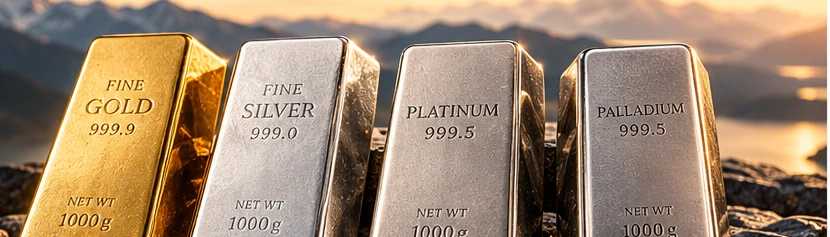
The name “gold IRA” is convenient marketing shorthand, but U.S. federal rules allow certain forms of gold, silver, platinum and palladium in an individual retirement account. Not all coins, bars or precious-metal-themed products qualify. A metal's name is only the beginning of the eligibility test.
Under IRC §408(m), metals and coins are generally treated as collectibles, with specific statutory exceptions for certain coins and sufficiently refined gold, silver, platinum and palladium bullion held under the required trustee arrangements. A particular IRA provider may impose stricter product restrictions.
The four eligible metal categories
| Metal | Can some physical products qualify? | Questions to ask |
|---|---|---|
| Gold | Yes: specified coins and qualifying bullion | Statutory coin exception, fineness, premium, storage |
| Silver | Yes: specified coins and qualifying bullion | Weight, storage cost, spread, product liquidity |
| Platinum | Yes: specified coins and qualifying bullion | Eligible specifications, dealer market depth, spread |
| Palladium | Yes: qualifying bullion | Fineness, custodian acceptance, dealer availability |
This matrix summarizes statutory categories; it is not a product approval list. Eligibility turns on the particular item and arrangement. The IRS cites 31 U.S.C. §5112 coins and bullion fineness linked to designated futures-market standards. Avoid relying on a single marketing-page purity percentage without checking the legal provision and the product itself.
Gold: monetary history meets IRA-specific handling
Gold has the strongest public association with precious-metal retirement accounts. Its attraction comes partly from its history as monetary metal and its global market. That history does not promise future returns. Gold can experience significant drawdowns and does not produce dividends.
Two things matter operationally: how far the dealer's invoice sits above the underlying metal value, and what a dealer would pay to repurchase the identical product under today's conditions. IRA-specific storage and administration make a modest premium more consequential than they might seem.
The Gold Eagle exception
The U.S. Mint says the American Gold Eagle bullion coin is 22-karat and contains 91.67% gold alloyed with silver and copper. Nevertheless, designated Gold Eagles can fall under a statutory coin exception. That is why blanket statements such as “every IRA gold coin must be at least 99.5% pure” are inaccurate.

Coin artwork is illustrative; use the Mint and actual product documentation to verify composition.
Silver: more ounces, different economics
Silver often appeals because it costs less per ounce than gold. But price per ounce is not the correct cost comparison. A large dollar allocation may require many more ounces and substantially more physical storage space. Premiums and exit spreads should be measured as percentages of the actual value of the product being bought.
Industrial and investment demand can both influence the silver market. Silver may be volatile and can behave differently from gold across cycles. Instead of assuming it is the “better-value version of gold,” compare portfolio purpose, likely holding period and all-in costs.

Illustrative silver bullion composition, not a particular product available for purchase.
Platinum: a smaller market with industrial exposure
Platinum is used in industrial and automotive applications and in jewelry. A platinum allocation therefore involves a different demand picture from gold, which is widely held for investment and official reserves. Small markets can make dealer selection, product availability and resale terms important.
Before choosing a particular platinum coin or bar, check that its specification fits an IRA exception and that the custodian will actually accept it. “Platinum” on a dealer's shopping page is not an eligibility determination.
Palladium: the fourth eligible category
Palladium is often omitted from basic gold IRA pages, but the IRS explicitly includes qualifying palladium bullion in its description of the statutory exceptions. Palladium's industrial-market exposure and price dynamics can be distinctive and volatile. Dealer spreads and access to an active resale market matter especially when the buyer may need to sell promptly.
The palladium exemption does not mean any palladium-themed collectible coin is necessarily approved. The bullion and possession criteria, as well as custodian acceptance, remain central.
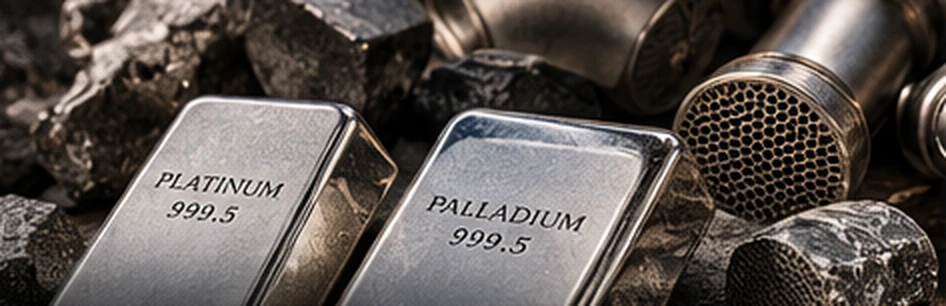
Illustrative industrial-metals artwork; specific purity markings must be verified on real products.
What is often not eligible?
Ordinary rare coins, antiques and collectibles do not become IRA-eligible because they contain some gold or silver. A high-mintage novelty coin, a decorative medallion or an otherwise fine-looking bar may not satisfy the appropriate exception. IRS rules treat non-exempt collectibles acquired by an IRA as distributed in the year of acquisition, which can trigger tax and potentially early-distribution penalties.
There is a practical distinction between a lawful product category, a custodian's accepted inventory, and a dealer's current quote. All three need checking, and the buyer should keep written confirmation.
Four expensive assumptions to avoid
- “It's 99.9% pure, so any bar automatically qualifies.” Product-specific standards and custody still matter.
- “It's issued by a government mint, so every edition qualifies.” Statutory descriptions matter; proof and collector products require particular scrutiny.
- “I can take delivery because I own the IRA.” IRA ownership is not ordinary personal possession; custodian rules may make personal delivery a distribution.
- “Silver is cheaper, therefore it is cheaper to own.” Holding and liquidation expenses depend on quantity, product and storage.
A practical way to compare the four metals
Build a decision sheet that records the exact product, metal content, coin/bar status, premium, written same-day buyback, minimum tradable unit, custodian eligibility determination, annual storage method and expected liquidation timeline. Compare that worksheet—not four unrelated spot-price charts.
For costs, open our fee calculator. For an actual quote, use the Quote Analyzer. Neither tool certifies IRA eligibility or predicts price performance.
Questions readers ask
Can I own silver in the same IRA as gold?
Potentially yes if the IRA's trustee permits both and every purchase meets the relevant requirements. Fees can change when you store multiple product types.
Is there an IRA “approved brands” list?
A dealer's or custodian's list is its own inventory policy, not blanket IRS approval. Use the statute, official guidance, product documents and written custodian acceptance together.
Does the IRS guarantee the investment?
No. Tax-law eligibility is not a guarantee of metal quality, custodian solvency, dealer pricing or future returns.
Primary sources & verification
This page relies on official U.S. agency guidance. Rules, prices and account terms can change; consult current documents before moving retirement funds. Reviewed October 30, 2026. Illustrative numbers are not dealer offers.